


Quel type de maillots de bain pour filles les détaillants devraient-ils privilégier ?
Date de sortie : 04/09/2026
Table des matières
Choisir maillots de bain pour filles Créer une collection pour le prêt-à-porter ne se résume pas à trouver quelques modèles attrayants. Chaque client a des besoins différents. Certains parents recherchent des maillots de bain faciles à porter pour la piscine, tandis que d'autres souhaitent une meilleure couvrance pour la plage ou les activités de plein air.
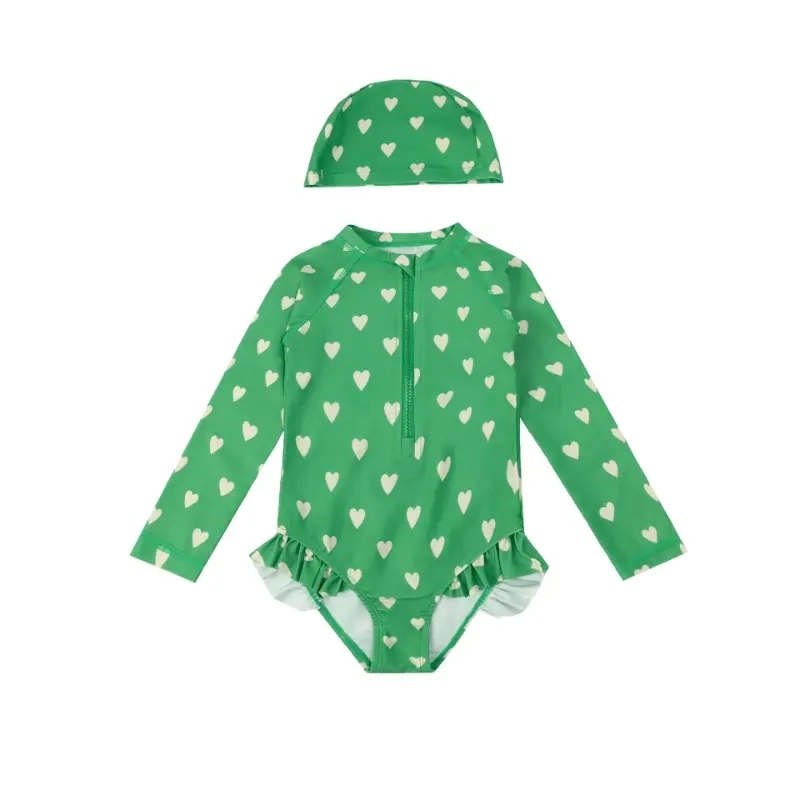

Pour les détaillants, proposer plusieurs modèles pratiques facilite la vente d'une collection en toutes saisons et pour toutes les occasions. Maillots de bain une pièce, ensembles deux pièces, modèles à manches longues, maillots anti-UV et maillots de bain imprimés ont tous leur place dans une collection bien pensée.
L'essentiel est de savoir à quoi chaque style convient le mieux et de sélectionner des produits qui offrent une différence claire en termes d'utilisation, de design ou de confort.
Pourquoi les détaillants devraient-ils proposer différents styles de maillots de bain ?
Les enfants ne portent pas de maillot de bain pour une seule activité. Un maillot de bain utilisé pour les cours de natation doit rester bien en place pendant les mouvements. Un maillot de bain acheté pour des vacances en famille à la plage doit offrir une meilleure couvrance et une protection solaire plus efficace.
C’est pourquoi proposer plusieurs styles peut s’avérer plus utile que de constituer une collection avec de nombreux produits similaires.
| Type de maillot de bain | Caractéristiques principales | Utilisations courantes |
| Maillot de bain une pièce | Coupe simple et liberté de mouvement | Piscines, cours, usage quotidien |
| Maillot de bain deux pièces | Souple et facile à mélanger | Vacances, plages, loisirs |
| Maillots de bain à manches longues | Plus de couverture | Activités de plage et de plein air |
| Maillots de bain anti-UV | Conçu pour les vêtements d'extérieur | excursions à la plage, activités estivales |
| Maillots de bain imprimés | Plus de choix de couleurs et de motifs | Collections axées sur la mode |
Cela offre aux clients plus de choix sans rendre la sélection des produits difficile à comprendre.
1. Maillots de bain une pièce pour la natation et les activités sportives
Les maillots de bain une pièce sont un choix pratique pour les enfants qui passent beaucoup de temps dans l'eau.
Sa conception assure le maintien du vêtement pendant la baignade, les jeux ou les cours de natation. Pour les enfants actifs, un bon ajustement est primordial, car des bretelles trop lâches ou des ouvertures mal ajustées peuvent s'avérer inconfortables lors des mouvements.
Pour les détaillants, les modèles une pièce se prêtent également à de multiples variations. Un même modèle de base peut être proposé avec différentes couleurs, imprimés, longueurs de manches ou détails décoratifs afin de s'adapter à différentes tranches d'âge et marchés.
2. Maillots de bain deux pièces pour la plage et les vacances
Le maillot de bain deux pièces donne un aspect différent à une collection et peut être particulièrement adapté aux vacances et aux loisirs.
Les parents privilégieront peut-être les ensembles deux pièces, plus faciles à enfiler et à retirer, tandis que les enfants apprécieront sans doute le plus grand choix de couleurs et de motifs. Varier les hauts et les bas permet également d'apporter une plus grande diversité visuelle à une collection saisonnière.
Lors de l'achat de ces modèles, il est essentiel de vérifier la coupe. La ceinture, les bretelles, l'élastique et la couvrance doivent être parfaitement assortis. Les imprimés attrayants sont utiles pour se faire remarquer, mais ils ne doivent pas se faire au détriment du confort.
3. Maillots de bain à manches longues pour une meilleure couvrance
Il est judicieux d'opter pour un maillot de bain à manches longues lorsque les clientes souhaitent une meilleure couvrance qu'un maillot de bain traditionnel.
Il peut être utile pour les vacances à la plage, les piscines extérieures et autres situations où les enfants passent beaucoup de temps dehors. Les manches longues offrent également aux détaillants une façon supplémentaire de différencier leur collection des maillots de bain sans manches classiques.
Le choix du tissu est primordial. Il doit permettre aux enfants de bouger librement sans que le vêtement ne soit trop lourd ou contraignant. L'élasticité et la tenue sont également importantes, notamment au niveau des épaules et des bras.
4. Maillots de bain anti-UV pour une utilisation en extérieur
Une journée à la plage est différente d'une heure à la piscine. Les enfants peuvent passer beaucoup plus de temps dehors, c'est pourquoi certains clients recherchent des maillots de bain offrant une meilleure couvrance.
Les maillots de bain à protection UV répondent à cette demande. Manches longues, décolletés plus hauts et couverture étendue rendent ces modèles adaptés aux activités estivales en extérieur.
Pour les détaillants, la description du produit doit clairement expliquer les caractéristiques de protection et de tissu offertes par le vêtement. Des informations claires permettent aux clients de comprendre en quoi le produit diffère d'un maillot de bain ordinaire.
5. Maillots de bain imprimés pour une collection plus attrayante
Les maillots de bain pour enfants doivent aussi être attrayants. Les couleurs et les motifs peuvent fortement influencer ce qui capte l'attention d'un enfant en magasin ou en ligne.
Les imprimés floraux, les rayures, les carreaux, les motifs numériques et les combinaisons de couleurs ludiques offrent aux détaillants davantage d'options pour composer une collection saisonnière.
Les motifs imprimés peuvent également être utiles pour les marques de distributeur. Un imprimé ou un thème de couleurs reconnaissable peut aider une marque à créer une image plus cohérente sur plusieurs produits.
Lors de l'examen des échantillons, les acheteurs doivent vérifier la qualité d'impression ainsi que le vêtement lui-même. Le motif doit rester net lorsque le tissu est étiré et les couleurs doivent être uniformes d'un lot de production à l'autre.
Quelle importance revêt le confort lors du choix d'un maillot de bain pour fille ?
Le confort est l'un des premiers critères que les acheteurs doivent vérifier, car les enfants peuvent porter un maillot de bain pendant plusieurs heures d'affilée.
La douceur du tissu est importante, mais ce n'est pas le seul facteur. L'élasticité, l'emplacement des coutures, les bretelles, la ceinture et la coupe générale peuvent tous influencer le confort du maillot de bain en mouvement.
Les détaillants à la recherche de maillots de bain confortables pour filles Il faut considérer le vêtement dans son ensemble plutôt que de se fier uniquement à sa composition. Un maillot de bain peut paraître parfait sur une fiche produit, mais un échantillon réel peut révéler si le tissu est trop rigide, si les coutures frottent ou si les bretelles exercent une pression excessive sur les épaules.
C’est pourquoi il est utile de réaliser des essais sur des échantillons avant de passer une commande plus importante. Des vérifications simples, comme étirer le tissu, examiner les coutures et essayer différentes tailles, permettent de déceler rapidement les problèmes.
Quand la performance de séchage rapide est-elle utile ?
Les maillots de bain à séchage rapide peuvent être particulièrement utiles pour les vacances et les activités de plein air.
Un enfant peut nager le matin, passer un moment à la plage, puis retourner dans l'eau plus tard dans la journée. Si le maillot de bain met trop de temps à sécher, il faudra peut-être en mettre un autre.
Pour ce type de client, maillots de bain pour filles à séchage rapide et doux peut offrir une combinaison pratique de séchage plus rapide et de toucher plus doux.
Les acheteurs doivent prendre en compte d'autres facteurs que le nom du produit. Le poids, la composition, l'épaisseur, l'élasticité et les finitions du tissu influencent la vitesse de séchage d'un maillot de bain. Il est donc important de vérifier ces détails lors de l'évaluation d'un échantillon.
Comment les détaillants peuvent-ils créer une collection de maillots de bain pour filles pratique ?
Un détaillant n'a pas besoin d'un grand nombre de maillots de bain quasi identiques. Il est souvent plus judicieux de choisir des modèles qui répondent aux différents besoins de la clientèle.
Par exemple:
| Besoins des clients | Direction du produit appropriée |
| leçons de natation | Maillots de bain une pièce pratiques |
| Utilisation régulière de la piscine | Styles une pièce et deux pièces simples |
| Vacances à la plage | Modèles deux pièces et à manches longues |
| Plus de couverture extérieure | maillots de bain anti-UV |
| Clients axés sur la mode | Styles imprimés et à motifs |
| Clients axés sur le confort | Tissus doux et souples |
| Baignade fréquente pendant les vacances | Styles à séchage rapide |
Ce type de sélection facilite l'explication de la finalité de chaque produit et donne aux clients une raison de choisir entre différents styles.
Que doivent vérifier les acheteurs avant de commander ?
Une fois les modèles préférés sélectionnés, les acheteurs doivent encore examiner attentivement les produits eux-mêmes.
Tissu
Vérifiez la douceur, l'élasticité, l'épaisseur et la capacité de maintien du tissu. Le maillot de bain doit épouser les formes du corps mais reprendre sa forme initiale après utilisation.
Construction
Portez une attention particulière aux coutures, aux bretelles, aux élastiques et aux ouvertures. Ces zones doivent résister aux mouvements et aux lavages répétés.
Tailles
Les tailles pour enfants peuvent varier d'un pays à l'autre ; il est donc important de bien vérifier les mesures. Un guide des tailles clair facilitera également les ventes en ligne.
Conception
Vérifiez que les couleurs, les imprimés et le style général correspondent bien à la clientèle visée. Un design qui fonctionne sur un marché donné peut ne pas avoir le même impact ailleurs.
Personnalisation
Pour les marques de distributeur, la personnalisation peut s'avérer utile pour créer une collection avec des couleurs, des imprimés, des étiquettes ou des emballages spécifiques.
Pourquoi le fournisseur est-il important ?
Un détaillant peut avoir besoin de plusieurs modèles, tailles, couleurs et imprimés provenant du même fournisseur. Si le fabricant est en mesure de gérer le développement et la production de produits aux designs variés, la gestion de la collection s'en trouve grandement simplifiée.
Ceci est particulièrement utile pour les marques qui souhaitent que leurs maillots de bain aient un niveau de qualité constant plutôt que de s'approvisionner pour chaque modèle auprès d'une usine différente.
EFIRSTY travaille dans le secteur des maillots de bain et des vêtements de sport depuis 2009 et propose des services de fabrication OEM et sur mesure. Son expérience dans différents styles de maillots de bain permet aux acheteurs d'aborder le développement de produits, les tissus, les designs et les exigences de production au sein d'un même programme de fabrication.
Foire aux questions
1. Quels types de maillots de bain pour filles les détaillants devraient-ils proposer ?
Une collection pratique peut inclure des maillots de bain une pièce, des maillots de bain deux pièces, des modèles à manches longues, des modèles anti-UV et des articles imprimés. La composition idéale dépend du marché cible et des principales occasions d'achat.
2. Les maillots de bain une pièce ou deux pièces sont-ils mieux adaptés aux filles ?
Cela dépend de l'usage prévu. Les maillots de bain une pièce sont souvent un choix pratique pour la natation et les activités sportives, tandis que les modèles deux pièces conviennent parfaitement aux vacances et aux tenues de plage décontractées.
3. Qu'est-ce qui rend les maillots de bain pour filles confortables ?
Un tissu doux, une élasticité adaptée, des coutures lisses, des bretelles sécurisées et une bonne coupe contribuent tous au confort. Aucun critère à lui seul ne détermine le confort d'un maillot de bain.
4. Les maillots de bain à séchage rapide sont-ils utiles pour les enfants ?
Oui, surtout pour les vacances à la plage, les séjours en station balnéaire et les journées où les enfants se baignent plusieurs fois. Un séchage plus rapide permet de réutiliser le même maillot de bain au cours de la journée.
5. Quelles questions les détaillants doivent-ils poser à un fabricant de maillots de bain avant de passer commande ?
Les acheteurs peuvent se renseigner sur les options de tissu, les gammes de tailles, la personnalisation, le développement d'échantillons, les quantités minimales de commande, la capacité de production, le contrôle de la qualité et les modalités de livraison.
Conclusion
Une belle collection de maillots de bain pour filles n'a pas besoin de proposer un grand nombre de modèles. L'important est d'offrir des styles adaptés à différentes situations et préférences.
Les maillots de bain une pièce conviennent à la natation régulière et aux activités sportives, tandis que les ensembles deux pièces offrent plus de choix pour les vacances et les loisirs. Les modèles à manches longues et à protection UV sont pratiques pour les activités de plein air, et les imprimés apportent une touche d'originalité à la collection.
Le confort et les performances de séchage sont également des critères importants à prendre en compte, notamment pour les produits destinés à un usage fréquent.
En choisissant des styles aux différences marquées et en collaborant avec un fabricant capable de prendre en charge différents modèles et exigences de personnalisation, les détaillants peuvent constituer une collection plus facile à gérer et plus utile à leurs clients.