







What Makes a One-Shoulder Swimsuit Safe and Comfortable for Kids?
Release time: 2026-06-11
Table of Contents
Parents shopping for kids’ swimwear rarely think about strap engineering — until their child comes out of the pool with a red mark across one shoulder, or the suit has slipped down mid-swim lesson. A one-shoulder design looks effortlessly stylish on the rack, but asymmetric construction puts uneven stress on a child’s body in ways a standard two-strap suit never does.
So what actually separates a safe, well-engineered one-shoulder swimsuit from one that just looks good in product photos? The answer lies in three overlooked details: strap adjustability, fabric structure, and trim engineering around the neckline and leg openings.
The Hidden Engineering Problem Behind Asymmetric Swimwear
A one-shoulder cut removes one of the two support points a traditional swimsuit relies on. That single remaining strap has to carry the full weight of fabric tension across the chest and back — which creates three specific risks if the garment isn’t engineered correctly:
- Uneven pressure distribution, concentrating tension on one side of a child’s still-developing shoulder and collarbone area
- Slippage during movement, especially in pool play, diving, or swim lessons where shoulders are in constant motion
- Sizing mismatch over a single season, since children’s body proportions change faster than adult sizing assumes
This is precisely why one-shoulder girl’s swimwear without adjustable hardware tends to generate more parent complaints than any other silhouette in the kids’ category — the design looks current, but the fit logic often hasn’t caught up.
Three Technical Features That Make a One-Shoulder Swimsuit Actually Safe
Not every asymmetric swimsuit solves these problems the same way. The difference between a comfortable suit and a problematic one usually comes down to:
- Adjustable strap hardware — allowing the single shoulder strap to be lengthened or shortened so tension sits correctly regardless of a child’s frame, rather than relying on a fixed-length strap sized for an “average” body
- Flat, stretch-engineered trims at the neckline and leg openings, which distribute pressure across a wider surface area instead of digging into a narrow seam line
- Textured, structured fabric that holds its shape without requiring extra elastic tension to stay in place — reducing how hard the single strap has to work
Strap Design Comparison: Fixed vs Adjustable One-Shoulder Construction
| Factor | Fixed-Length Strap | Adjustable Strap |
| Fit across age/size range | Sized for one body type only | Adapts to growth and frame variation |
| Slippage risk during swimming | Higher, especially in active play | Lower, tension can be tightened |
| Shoulder pressure distribution | Concentrated at one fixed point | Customizable to reduce localized pressure |
| Lifecycle per child | Often outgrown within one season | Extends usable period across growth spurts |
| Parent complaint rate (industry pattern) | Higher | Lower |
How EFIRSTY Engineers Comfort Into Asymmetric Kids’ Swimwear
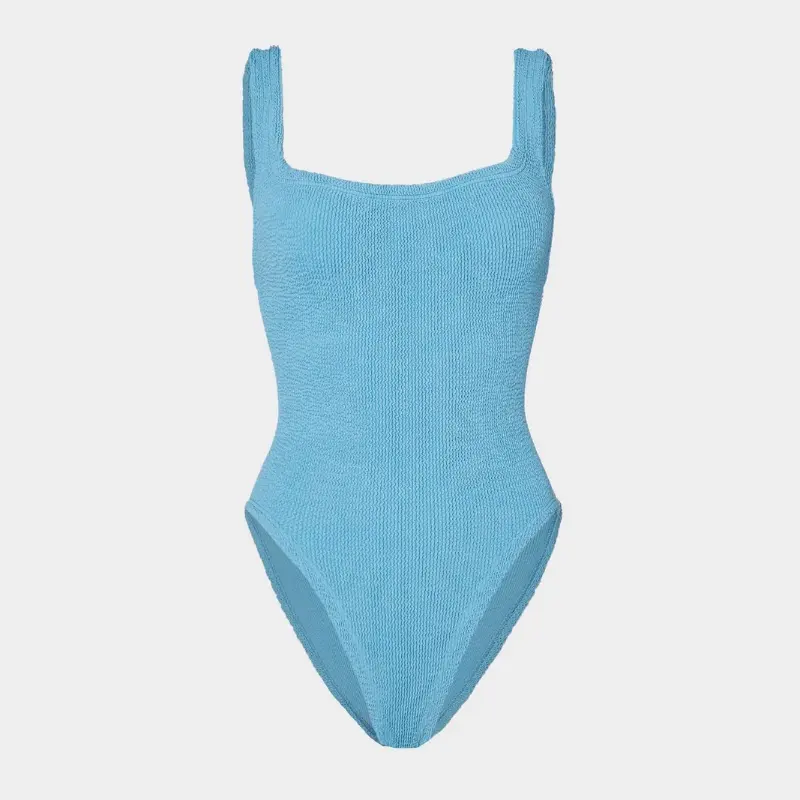
Style alone doesn’t solve the safety question — it has to be backed by construction choices a factory can actually execute consistently across every production run. EFIRSTY’s textured crinkle one-shoulder swimsuit is built specifically around this gap: the adjustable strap hardware lets the fit be corrected at the point of wear rather than relying on guesswork at the cutting table, while flat, non-tight trims around the neckline and leg openings keep red-mark complaints out of the return pile.
What matters most to B2B buyers, though, is whether this engineering can be replicated and customized at scale:
- Custom logo placement via printing, embroidery, or heat transfer, applied without compromising the structural integrity of the adjustable strap
- Flexible accessory and trim requests, including small-order support for non-standard hardware or color-matched strap fittings
- Fabric and print customization, from the signature textured crinkle finish to client-specific colorways and patterns
- UPF 50+ sun protection and chlorine-resistant, colorfast fabric, maintained consistently across custom production batches
- Responsive technical support for sizing adjustments, since kids’ swimwear sizing logic differs significantly from adult product lines
For activewear and swimwear brands building out a kids’ collection, the real differentiator isn’t the asymmetric silhouette itself — plenty of factories can copy a design photo. It’s whether the supplier understands why the strap needs to adjust, why the trim needs to stay flat, and can engineer that into a private-label product without driving up MOQ. EFIRSTY’s production team works directly with sourcing managers to translate these technical requirements into manufacturable specs, with low-MOQ flexibility for brands testing a new kids’ one-shoulder swimsuit style before committing to bulk volume.
FAQ
Q: Is a one-shoulder swimsuit safe for young children to wear during swim lessons?
A: Yes, provided the strap is adjustable and the fabric structure holds shape without excessive elastic tension. Fixed-length straps are more prone to slipping during active swim instruction.
Q: Will an adjustable strap cause discomfort or dig into a child’s skin?
A: No, when paired with flat, stretch-engineered trim at the strap edges rather than a narrow elastic band, adjustable straps distribute pressure rather than concentrate it.
Q: How long can a child typically wear the same one-shoulder swimsuit before outgrowing it?
A: With adjustable strap hardware, the usable period generally extends beyond a single growth spurt, compared to fixed-strap designs sized for one body proportion.
Q: Can the strap hardware and trims be customized for private label production?
A: Yes. EFIRSTY supports custom logo application, accessory requests, and small-order adjustments without altering the core safety engineering of the strap.

